RCM Automation 7 min read
Why Automated Eligibility Verification Is Critical for Preventing Claim Denials
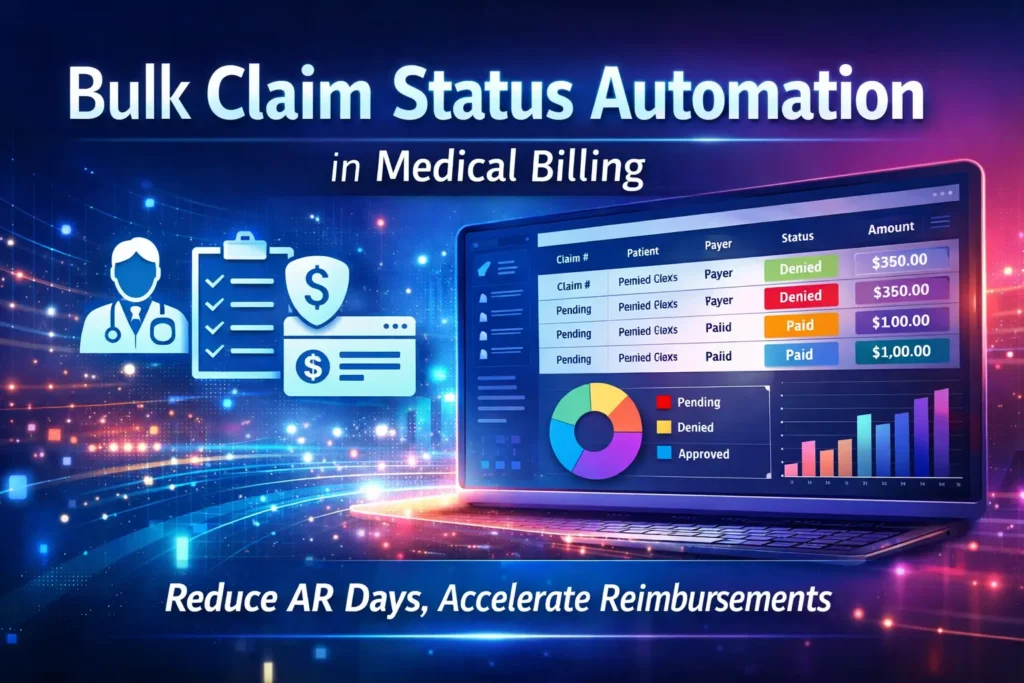
Eligibility verification can help a billing team identify inactive coverage, mismatched member data and available benefit information before a claim is submitted. It cannot prevent every denial, determine medical necessity or guarantee that a payer will reimburse a later claim. The useful goal is narrower: detect eligibility-related exceptions early, route them to the right person and document what was checked.
This guide explains how a 270/271 eligibility workflow fits into denial prevention, what the response can and cannot establish, and which measures show whether automation is improving the process.
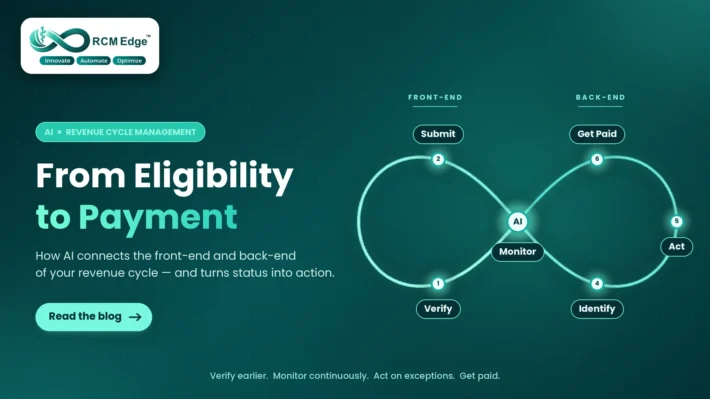
To connect the front-end check with later payer follow-up, see our guide to eligibility-to-payment revenue cycle workflows.
What eligibility verification checks
HHS identifies ASC X12N 270/271 Version 5010 as the adopted standard for electronic eligibility and benefit verification. A provider or authorized partner submits a 270 inquiry and receives a 271 response from the payer. CMS says its Medicare HETS 270/271 system supports accurate claim preparation, beneficiary-liability work and eligibility checks for specific services.
Depending on the payer, plan, inquiry and response, an eligibility workflow may return information such as:
- active or inactive coverage for a relevant date;
- member and plan identifiers;
- service-type coverage information;
- deductible, copay or coinsurance information;
- in-network and out-of-network variations; and
- response errors or incomplete matching information.
CMS eligibility operating-rule guidance says health plans must respond in real time to providers’ eligibility questions with specified coverage and patient financial information. The actual detail available still varies by payer, plan, service type and submitted data.
What an eligibility response does not guarantee
An active-coverage response is not an authorization, a medical-necessity decision or a promise of payment. A later claim can still be affected by coding, documentation, timely filing, coordination of benefits, authorization, contract terms, benefit limits and other payer rules.
That distinction matters for both operations and patient communication. Staff should present returned eligibility and benefit information as information received for a defined inquiry and date—not as a final adjudication of the future claim.
The commercial insurance eligibility verification software page explains RCM Edge’s available workflow. This article remains the supporting owner for eligibility-related denial prevention and exception handling.
Eligibility-related problems to catch before claim submission
Inactive or unmatched coverage
The payer may report inactive coverage, an invalid member identifier or a mismatch involving the subscriber name, date of birth or relationship. The next action may be to correct registration data, confirm another plan or contact the patient—not simply rerun the same inquiry.
Wrong payer or plan routing
A patient may have changed plans, supplied an outdated card or have multiple coverage records. The workflow should preserve the returned payer and plan identifiers and route coordination-of-benefits questions for review.
Service-type or benefit ambiguity
A general active response may not contain the detail needed for the scheduled service. Staff may need a more specific service-type inquiry, payer portal review or payer contact. Missing detail should be treated as an exception rather than interpreted as coverage.
Patient-responsibility information
Deductible, copay and coinsurance information can support a pre-service discussion. It should be tied to the date and response received and should not be represented as a final patient balance.
Separate authorization requirements
Eligibility verification and prior authorization are different workflows. A 271 response may help identify information relevant to a service, but teams still need a defined process for determining and completing any required authorization. RCM Edge’s Prior Authorization module is in development.
A practical automated eligibility workflow
1. Define the verification cohort
Select encounters using consistent rules: appointment date range, payer group, location, specialty and service type. Record which encounters are excluded so completion rates are interpretable.
2. Validate input data
Check that the inquiry contains the required patient, subscriber, payer and provider identifiers. Invalid or missing input should enter a correction queue instead of being counted as a completed verification.
3. Submit the supported inquiry
Use the appropriate 270/271 connection or supported payer workflow. Maintain a timestamp, source and transaction reference so staff can trace the response later.
4. Preserve and normalize the response
Organize common fields for staff review without discarding the original payer response. Normalization should not invent benefit detail or convert an ambiguous response into a confirmed result.
5. Route exceptions
Create work queues for inactive coverage, demographic mismatch, missing benefits, payer failure and responses that require manual review. Assign an owner, due date and escalation path for each exception category.
6. Recheck when circumstances change
Coverage information can change. Define when a new inquiry is needed—for example, after a plan change, when the service date moves or when the existing result is outside the organization’s freshness policy.
7. Connect findings to claim preparation
Document resolved eligibility issues and ensure corrected member, payer or plan data reaches the billing workflow. Verification that remains isolated in a separate screen does not prevent the downstream data problem.
The detailed eligibility verification process guide provides a step-by-step operating model. Teams should also review the supported Eligibility payer connections against their actual payer mix.
Metrics for an eligibility-denial prevention pilot
| Metric | Purpose | Measurement guardrail |
|---|---|---|
| Eligible encounters | Defines the pilot denominator | Keep inclusion and exclusion rules unchanged |
| Successful usable responses | Shows response coverage | Do not count an incomplete response as usable |
| Input or matching failures | Identifies registration-data problems | Separate patient-data, payer and system causes |
| Exceptions resolved before service | Measures operational follow-through | Define “resolved” and retain evidence |
| Repeat-check rate | Shows rework or freshness requirements | Record why each repeat was needed |
| Staff touch time | Compares manual effort | Use the same cohort before and during the pilot |
| Eligibility-related denial rate | Measures a downstream result | Use agreed denial codes and control for payer mix |
Do not attribute every denial-rate change to eligibility automation. Track eligibility-related denial categories separately and investigate concurrent changes in registration, coding, authorization, claim edits and payer mix. The broader denial management process should preserve the reason code and root cause.
Questions to ask before selecting automation
- Which payer connections and transaction types are available today?
- Which response fields are returned for our priority payers and services?
- How are incomplete, unmatched and failed inquiries categorized?
- Can staff see the original payer response and transaction timestamp?
- How does corrected information return to the scheduling, EHR or billing workflow?
- What access controls, audit logs and retention policies apply?
- How will the pilot measure usable responses, staff work and downstream denials?
Use the eligibility automation ROI calculator with your own volumes, labor inputs and exception rates. Treat it as a planning model, not a promised savings result.
Current RCM Edge Eligibility scope
RCM Edge currently provides Eligibility Verification across 566 payer connections. A connection listing does not establish that every plan, service type, benefit field or workflow is supported. Confirm priority payers, required response details, credentials and integration requirements before implementation.
Claim Status Automation is separately available across 468 payer connections. Prior Authorization, Denial Management and Accounts Receivable modules are in development. The broader RCM automation page distinguishes current availability from roadmap scope.
Book a 30-minute demo to review a defined eligibility cohort, payer coverage and measurable pilot criteria. Do not include protected health information in the booking form.
Frequently asked questions
Does eligibility verification guarantee claim payment?
No. It reports eligibility and available benefit information for a defined inquiry. Payment still depends on factors such as coding, documentation, authorization, contract terms, benefit limits and claim adjudication.
How can eligibility automation help reduce denials?
It can surface inactive coverage, member-data mismatches and incomplete benefit information earlier and route those exceptions for correction. The result depends on response quality and whether staff complete the required follow-up.
When should eligibility be rechecked?
Organizations should define a freshness policy and repeat the inquiry when relevant information or circumstances change, including payer, plan, service date or patient-supplied coverage details.
Official sources
- HHS adopted standards and operating rules
- CMS eligibility and claim-status operating rules
- CMS eligibility inquiry and HETS 270/271 guidance
- CMS HIPAA Eligibility Transaction System
Reviewed September 22, 2026. Payer responses and operational requirements change; verify current payer and official guidance for each workflow.