FOR ENTERPRISE RCM TEAMS
Enterprise RCM Automation With Governance Built for Scale
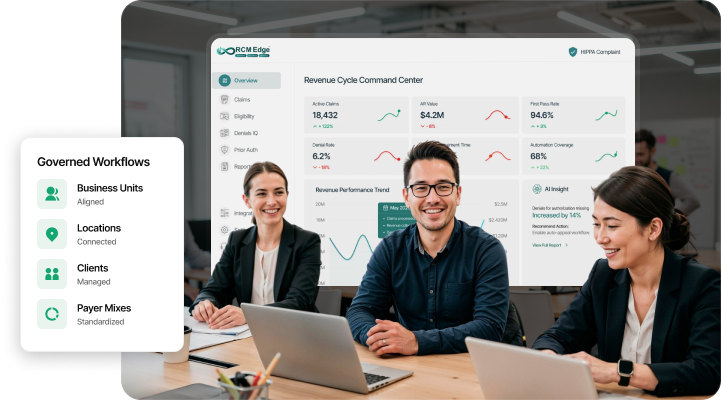
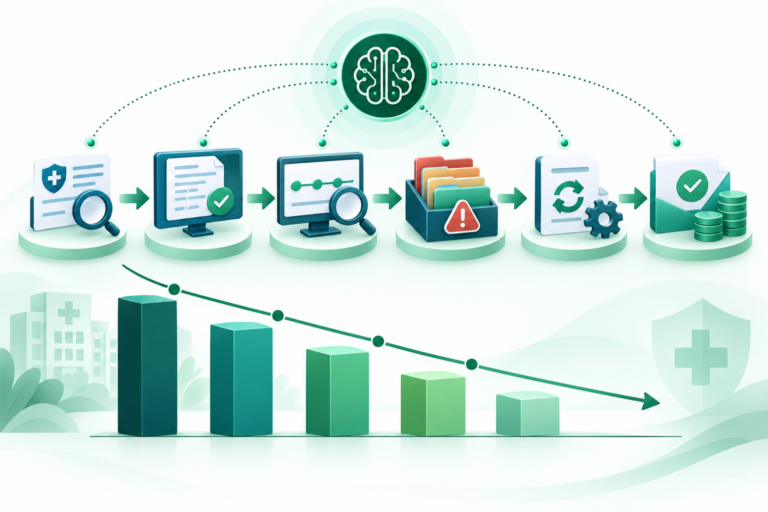
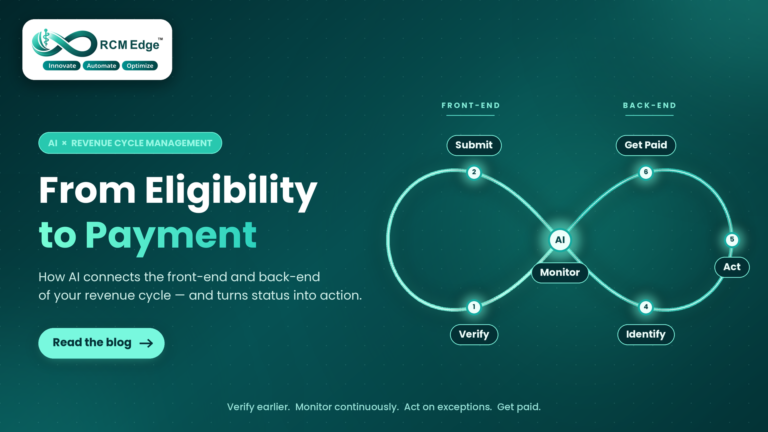
Coordinate revenue-cycle automation across business units, locations, clients, and payer mixes. RCM Edge gives enterprise teams a consistent workflow layer, structured exception routing, and operational visibility without forcing a system replacement.
Enterprise workflow governance | 1,034 payer connections | SOC 2 Type II | ISO 27001
THE OPERATIONAL PROBLEM
Enterprise Scale Magnifies Every Inconsistent RCM Process
When locations and teams use different rules, queues, and reporting methods, leaders cannot compare performance or expand automation safely across the organization.
Fragmented Enterprise Operations
Business units repeat the same payer work with different tools and handoffs. Exceptions are difficult to govern, and reporting rarely explains why work is delayed.
Governed Automation at Scale
Shared workflow standards execute repeatable work while business-specific rules, permissions, exceptions, and performance views remain controlled.
CORE CAPABILITIES
Standardize the Revenue Cycle Without Losing Local Control
Create a common automation foundation and deploy modules according to enterprise priorities, operating units, and risk controls.
Coordinate automation across core revenue-cycle stages and systems.
Normalize high-volume payer status workflows across teams and entities.
Apply consistent front-end coverage checks across locations and schedules.
Compare throughput, exceptions, and bottlenecks across the operation.
HOW IT WORKS
A Controlled Path From Pilot to Enterprise Rollout
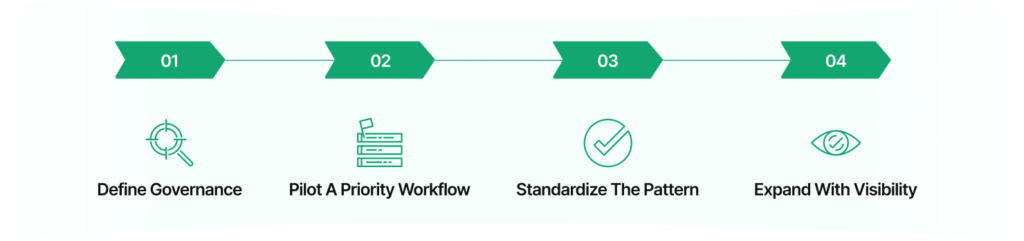
Enterprise deployment begins with one measurable workflow, documents governance and exception rules, and expands through repeatable rollout standards.
01. Define Governance
Set business owners, system access, data controls, measures, and escalation rules.
02. Pilot a Priority Workflow
Validate automation, exceptions, and reporting in a representative operating unit.
03. Standardize the Pattern
Document reusable rules while preserving approved unit-specific variations.
04. Expand With Visibility
Roll out by workflow or business unit and monitor performance centrally.
OPERATIONAL OUTCOMES
Create an Enterprise Operating Model for RCM Automation
Leaders gain a scalable automation framework while local teams keep the context and decision rights required to resolve complex revenue exceptions.
Consistent Governance
Apply shared rules, ownership, and audit expectations.
Reusable Deployments
Expand validated workflow patterns across the organization.
Central Visibility
Compare operational queues and exceptions across units.
Controlled Flexibility
Preserve approved payer, client, or location-specific rules.
BUILT FOR YOUR TEAM
Explore RCM Edge for Other Operating Models
Scale consistent workflows across multiple clients and payer mixes.
Reduce repetitive payer work for patient-access and billing teams.
FREQUENTLY ASKED QUESTIONS
Enterprise RCM Automation: Frequently Asked Questions
Can RCM Edge support multiple entities and locations?
Yes. Workflows can be organized around different operating units, clients, locations, specialties, payer mixes, and governance requirements.
How does an enterprise rollout begin?
Most organizations begin with a measurable workflow and representative operating unit, validate the governance model, and then expand using a documented deployment pattern.
Can local teams retain their exception rules?
Yes. Shared automation standards can coexist with approved variations for payers, clients, specialties, and operating units.
What security standards support enterprise use?
RCM Edge communicates HIPAA alignment, SOC 2 Type II, and ISO 27001 controls. Security and integration requirements can be reviewed during solution design.
SEE THE WORKFLOW ON YOUR DATA
Design Your Enterprise RCM Automation Roadmap
Bring your operating structure, system landscape, highest-volume workflows, and governance requirements. We will map a practical pilot and expansion path.