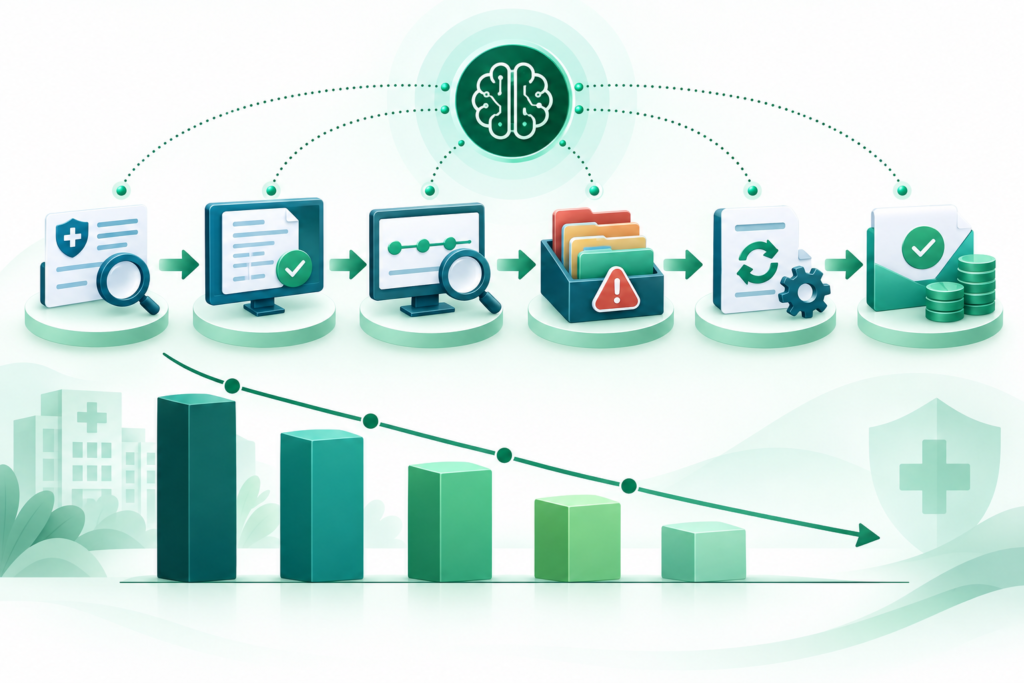
Healthcare revenue cycle management does not begin when a claim is submitted. It starts earlier with verifying a patient’s insurance coverage and continues through claim submission, claim status monitoring, follow-up, and payment. Traditionally, these activities are handled through separate manual processes. Staff may check payer portals, verify eligibility, update systems, monitor claims, and follow up […]
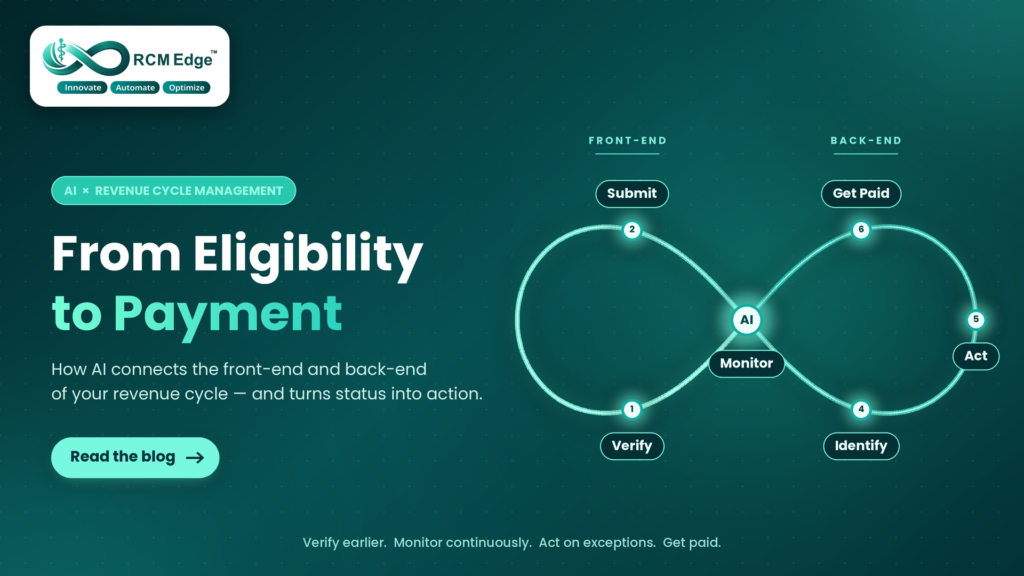
AI Claim Status Automation: A Practical AR Follow-Up Workflow
Learn how AI claim status automation can organize AR follow-up, prioritize exceptions, reduce manual payer research, and support faster revenue-cycle action.
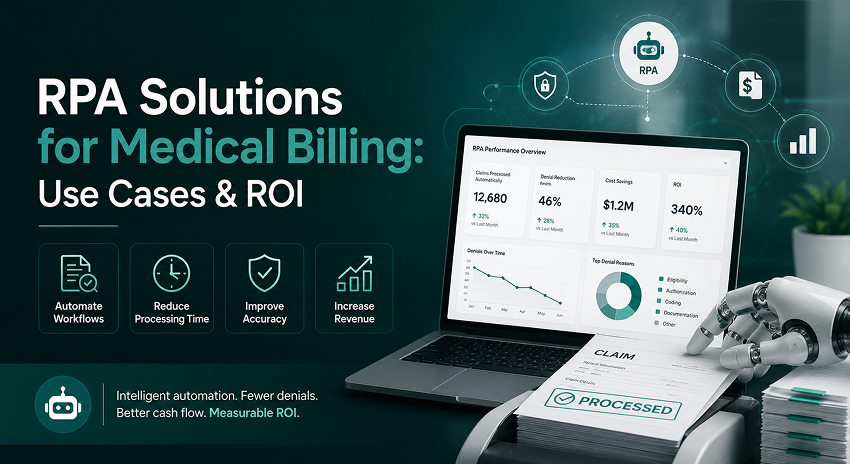
RPA Solutions for Medical Billing Revenue Cycle
How RPA solutions automate medical billing — top use cases across eligibility, claims, denials and AR, plus the ROI to expect. 2026 guide.
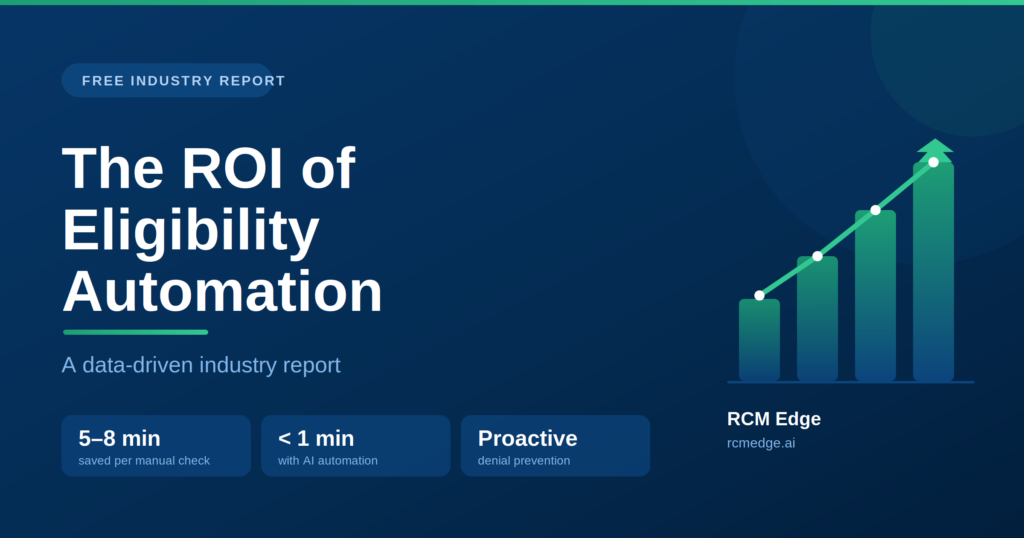
Eligibility Verification Automation ROI Calculator (2026)
Estimate eligibility verification automation ROI with transparent formulas, your own operating inputs, and CAQH time benchmarks. No entries are transmitted or stored.
Eligibility Verification Automation: Workflow, 270/271, and ROI
Learn how eligibility verification automation uses 270/271 transactions, routes exceptions, and supports a measurable business case.
Why Automated Eligibility Verification Is Critical for Preventing Claim Denials
Automated eligibility verification helps healthcare providers prevent claim denials and improve revenue cycle efficiency.
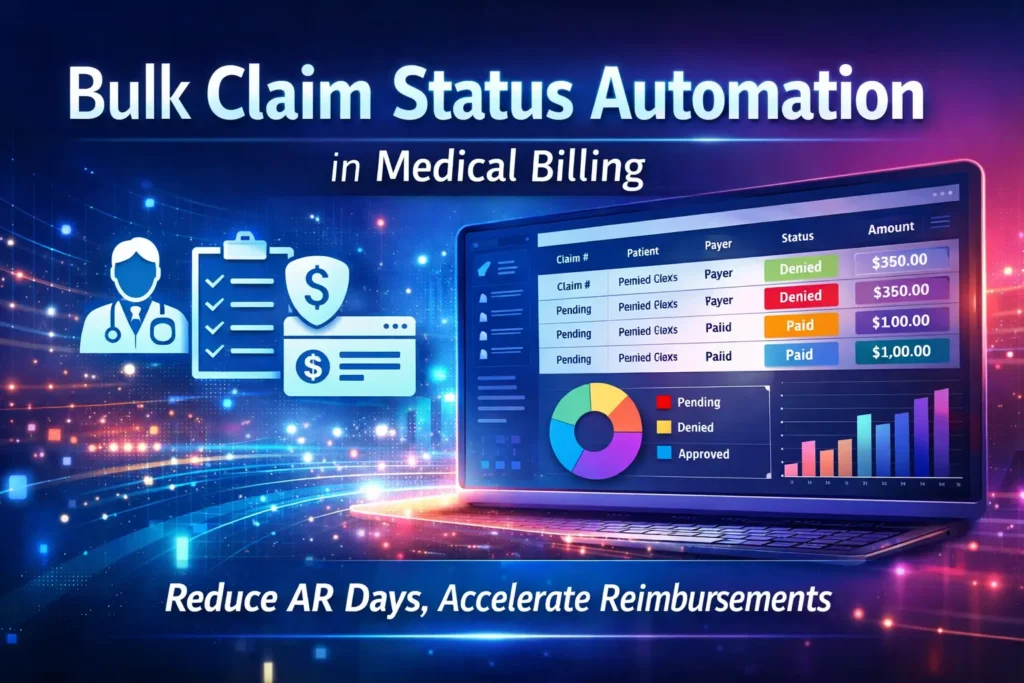
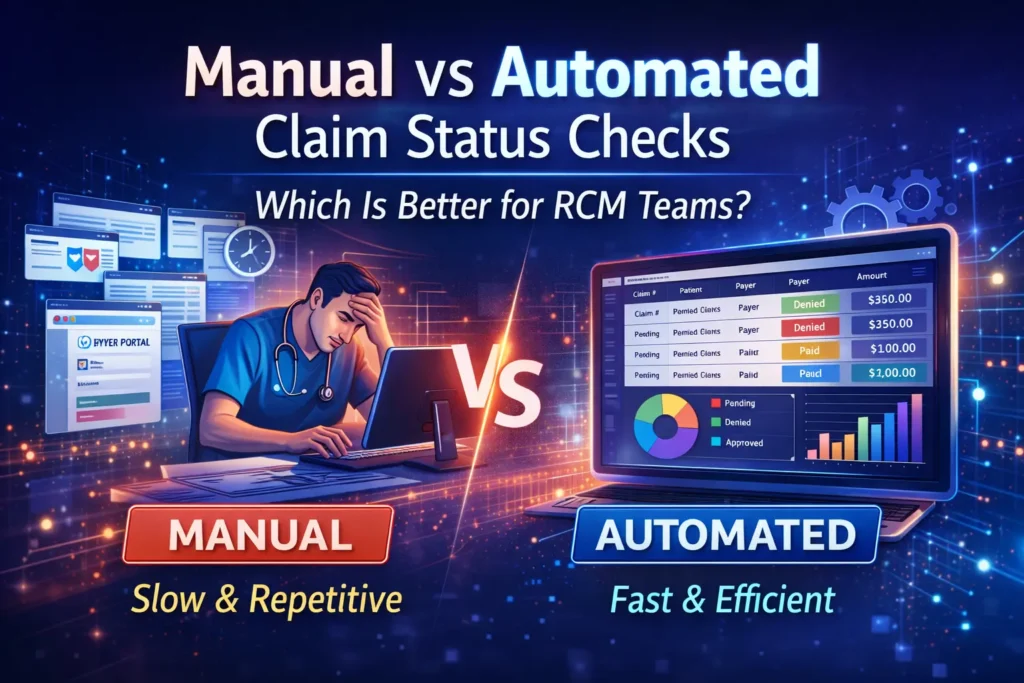
Manual vs Automated Claim Status Checks: Which Is Better for RCM Teams?
Compare manual and automated claim status checks across workflow, 276/277 transactions, payer coverage, exceptions, auditability, and pilot metrics.
The Future of Revenue Cycle Automation: From Eligibility to AI Denial Intelligence
Healthcare revenue cycle management (RCM) is undergoing a fundamental transformation.