
Denials 4 min read
What Is Denial Management? Definition, Codes & KPIs
Key takeaways
- Denial management spans the full revenue cycle, front end to appeals.
- A rejection occurs before adjudication; a denial is an adjudicated outcome. The correct response may be correction, reconsideration, appeal or another payer-specific action.
- CARC and RARC codes tell you why a payer adjusted or denied a claim.
- Track denial rate, overturn rate, clean claim rate and write-off rate.
Denial management gives teams a consistent way to interpret payer outcomes, assign follow-up and learn from recurring causes. This guide explains the definition, denial versus rejection, common causes, codes and KPIs to track. For the operational workflow, use the seven-step denial management process.
What is denial management?
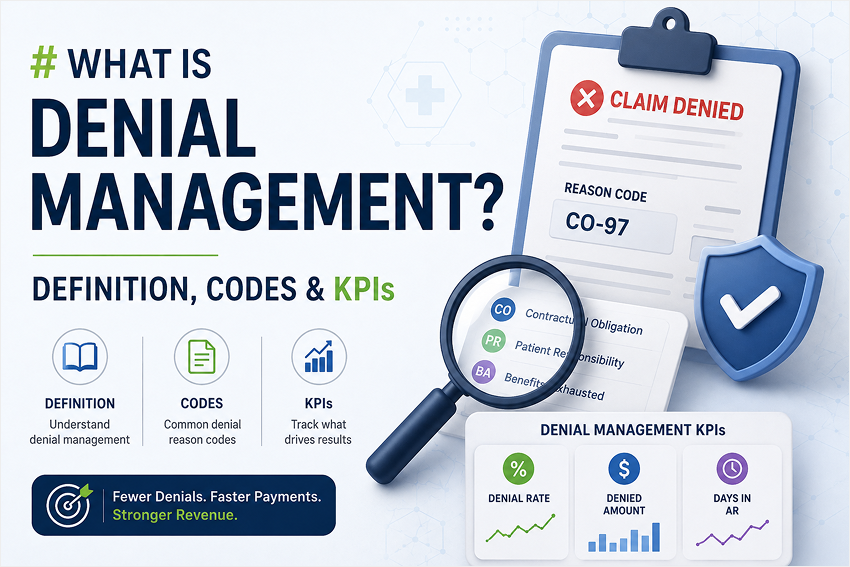
Denial management is the process of identifying why insurance claims are denied, correcting and appealing them to recover revenue, and fixing root causes so the same denials stop recurring. It spans the full revenue cycle, from eligibility at the front end to appeals at the back.
Denial vs. rejection
A rejection occurs before adjudication, often because data or formatting did not pass an intake edit. A denial is an adjudicated outcome. Review the payer response to decide whether correction, reconsideration, appeal or another action is appropriate.
Why healthcare claims get denied
Use your own remittance and payer data to verify the dominant causes. Common categories to investigate include:
- Eligibility and coverage: inactive plans, coverage dates, benefit limitations, or unverified patient information.
- Prior authorization: missing, invalid, expired, or service-specific authorization requirements.
- Registration: member ID, patient name, date of birth, provider, or coordination-of-benefits mismatches.
- Coding and medical necessity: code, modifier, diagnosis, bundling, coverage-policy, or documentation conflicts.
- Claim submission: missing fields, duplicate claims, payer routing, attachment, or timely-filing problems.
- Payer processing: adjudication, contract, payment, or policy issues that require payer-specific research.
Separate the payer’s adjustment message from the operational root cause. The same CARC or RARC can require different action depending on the claim, group code, documentation, payer instructions, and filing deadline.
Common denial codes
- CARC — Claim Adjustment Reason Codes (why the amount changed)
- RARC — Remittance Advice Remark Codes (extra detail)
- Frequent themes: eligibility, missing prior auth, coding/medical necessity, timely filing
Denial management KPIs
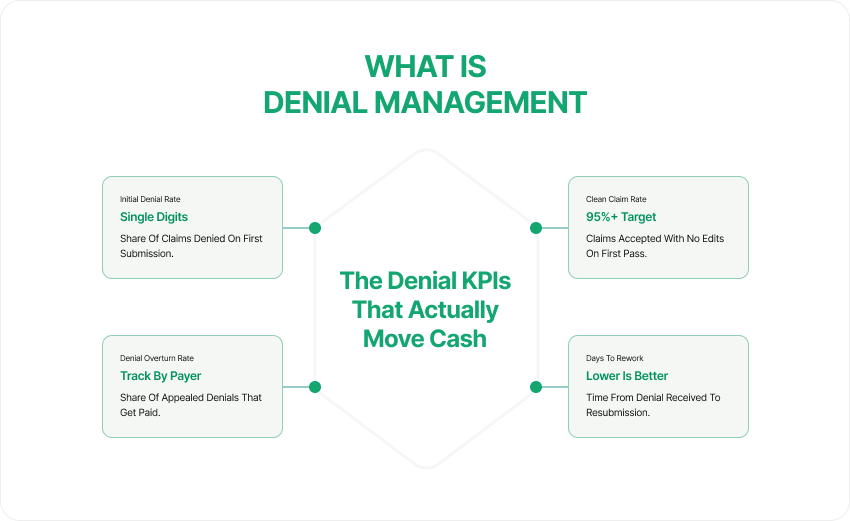
- Initial denial rate — define the claim or dollar denominator and reporting period.
- Denial overturn or recovery rate — favorable decisions divided by decided appeals, reported separately from dollars recovered.
- Clean claim rate — claims passing edits without manual intervention, using a consistently measured baseline.
- Denial write-off rate — denied dollars written off after the applicable correction, reconsideration, or appeal path closes.
Document the definition for every metric before setting a target. HFMA MAP Keys provides standardized definitions including clean claim rate and remittance denial rate; a remittance denial measure is not the same as every organization’s initial-denial report.
How to prevent denials
Use payer and reason-level patterns to prioritize prevention work. RCM Edge eligibility verification supports coverage and benefits workflows across 566 supported payers, and claim status automation supports status checks across 468. The denial-management module is in development; confirm scope and availability before planning deployment.
Frequently asked questions
What is denial management in simple terms?
Identifying why claims were denied, selecting the appropriate next action, tracking the result and using recurring causes to improve the upstream workflow.
What is the difference between a denial and a rejection?
A rejection occurs before adjudication and may be corrected and resubmitted. A denial is an adjudicated outcome; use the payer response to determine whether correction, reconsideration, appeal or another action applies.
What are CARC and RARC codes?
CARCs explain financial adjustments and RARCs may provide additional detail. Interpret them with the group code, remittance and payer instructions.
What KPIs measure denial management?
Use consistently defined measures such as remittance denial rate, recovery or overturn rate, denial write-offs and clean claim rate. Document the claim population and reporting period.