
Accounts Receivable 3 min read
How to Reduce Days in AR: A Step-by-Step Playbook
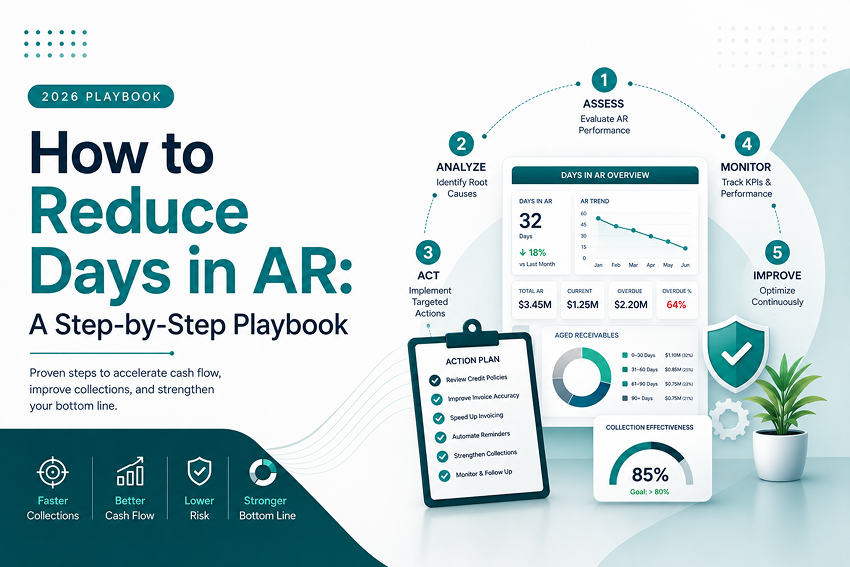
Key takeaways
- Track days in AR against your own specialty, payer mix, contract terms, and historical baseline; use a documented improvement target.
- Front-end accuracy and clean claims prevent AR building up at all.
- Prioritise follow-up by dollar value and age together.
- Automated status checks and worklists keep AR moving without extra staff.
High days in AR means cash is stuck in aging buckets. This playbook walks through the fastest levers to bring that number down.
What are days in AR?
Days in AR is the average number of days it takes to collect payment after a service. Compare it with an organization-specific baseline because payer mix, service type, billing cadence, and contract terms affect the result.
The playbook
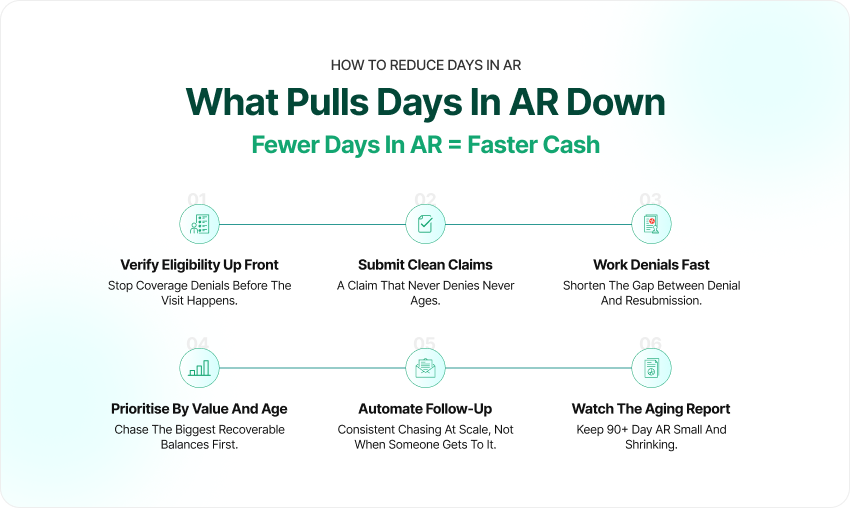
- Fix the front end — verify eligibility and prior authorization so claims don’t stall.
- Submit clean claims — scrub before submission to lift first-pass rate.
- Prioritize follow-up by value and age — chase the biggest, oldest recoverable claims first.
- Rework denials fast — denial deadlines and missing information become harder to manage when work waits.
- Automate status checks — reduce repeatable portal work and surface accounts that need review.
- Measure weekly — track days in AR and % over 90 days.
How automation reduces AR days
Auto-prioritized worklists and automated follow-up reduce repetitive research and help staff act on exceptions faster — see RCM Edge accounts receivable automation. When repeated payer-status research delays follow-up, review how automated claim status checks consolidate responses and route exceptions. Comparing tools for this workflow? Use our healthcare AR automation buying guide to evaluate integrations, exceptions, security, implementation, and pilot evidence.
Track days in AR alongside denial and collection trends with RCM Edge revenue cycle analytics.
Frequently asked questions
What is a good days-in-AR number?
Set a target from your own historical performance, specialty, payer mix, and contract terms. Track overall days in AR together with aging distribution and collection measures.
How do you reduce days in AR?
Fix the front end, submit clean claims, prioritize follow-up by value and age, rework denials fast, and automate status checks.
Why are my AR days high?
Usually front-end errors, low clean-claim rate, slow denial rework, or manual, reactive follow-up.
Can AR follow-up be automated?
Yes. Automated status research, prioritization, and routing can reduce repeatable work while staff handle denials, payer escalation, and other complex accounts.
See how RCM Edge can reduce repetitive payer research, prioritize follow-up, and route exceptions while your team remains in control.