Best Revenue Cycle Management Software in 2026: A Practical Buyer Comparison
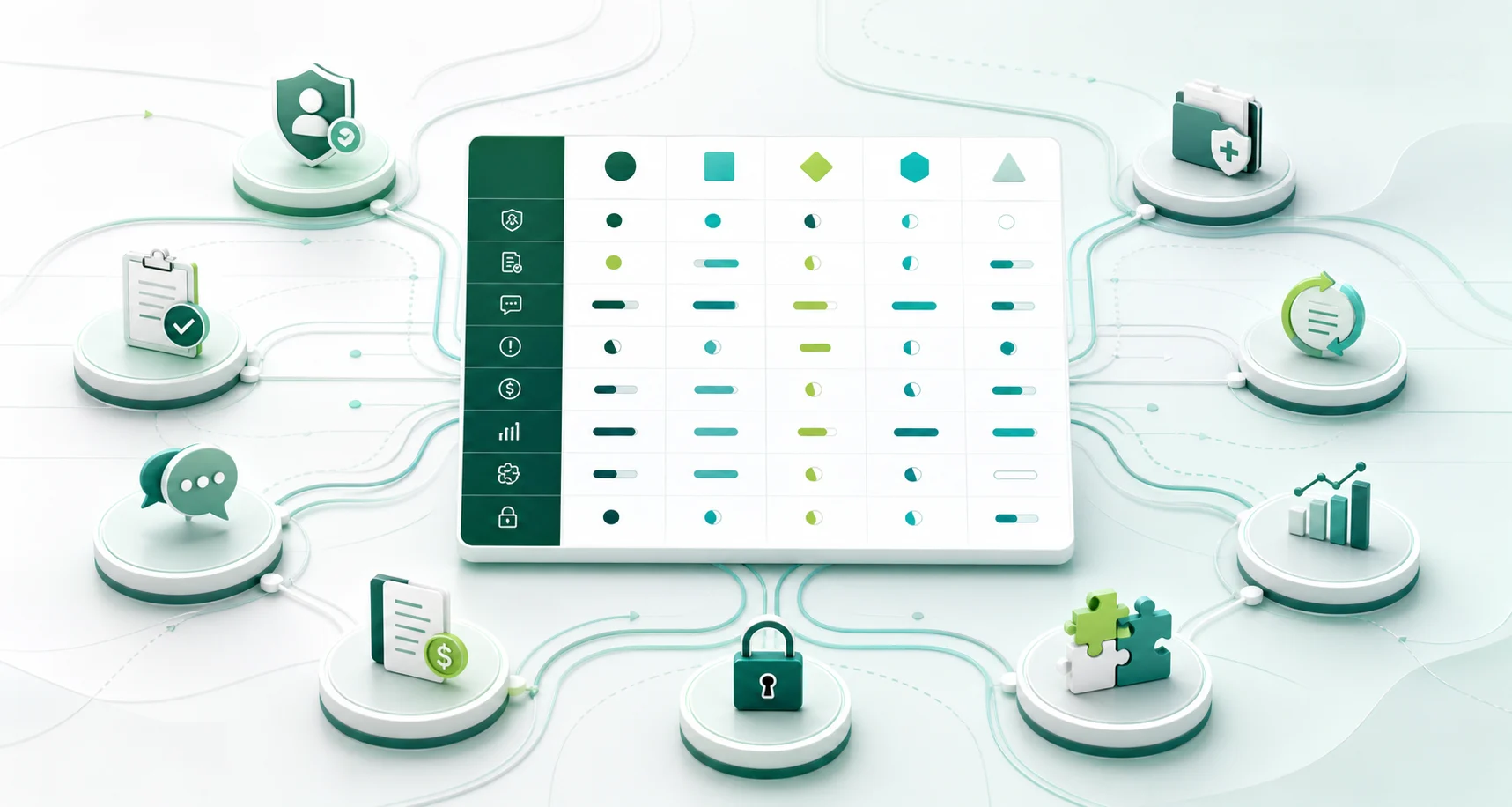
This list compares five revenue cycle management software vendors and platforms by workflow coverage, delivery model, integrations, and ideal evaluation fit. There is no universal “best” vendor—the right shortlist depends on the work you need to improve and the systems you already use. Start with our RCM software overview if you need the product-category basics before comparing vendors.
Methodology and disclosure: This guide compares capabilities described on official vendor websites, reviewed September 16, 2026. RCM Edge publishes this guide and is included in the comparison. This is not a hands-on ranking, paid placement, or claim that one product is best for every buyer. Verify current scope, integrations, security evidence, implementation, and pricing directly with each vendor.
Five RCM software vendors and platforms to evaluate in 2026
Platform
Official public positioning
Workflows highlighted publicly
Who should evaluate it
RCM Edge
Modular revenue cycle automation platform
Eligibility and claim status currently available; prior authorization, denial management, and AR follow-up in development
Billing companies, providers, enterprise RCM teams, and growing teams evaluating an automation layer
Stedi
Developer-focused healthcare clearinghouse APIs
Eligibility and benefits, coordination of benefits, insurance discovery, claims, remits, and real-time claim status
Technical teams that want API, SFTP, or portal-based transaction connectivity and plan to build workflows
Stedi: clearinghouse connectivity for technical teams
Stedi’s official documentation focuses on healthcare clearinghouse APIs and transaction connectivity. It describes eligibility and benefits, coordination of benefits, insurance discovery, claims submission, claim responses, remits, and real-time claim status through APIs, SFTP, and a portal. It belongs on the shortlist when a technical team wants developer-first infrastructure and expects to build or orchestrate the surrounding workflows. Official Stedi healthcare documentation.
Waystar: broad enterprise revenue-cycle platform
Waystar describes an end-to-end platform spanning financial clearance, patient financial care, clinical integrity and revenue capture, claim and payer payment management, denial recovery, and analytics and reporting. Providers and health systems evaluating a broad enterprise software footprint should include it in discovery and confirm which modules, integrations, and implementation services match their environment. Official Waystar platform overview.
Infinx: automation with RCM experts in the operating model
Infinx positions its Healthcare Revenue OS around AI agents, automation, and RCM experts. Its public materials cover patient access, prior authorization, document capture, clean claims, AR and denial follow-up, workforce orchestration, and analytics. It is relevant for organizations evaluating a combined technology and human-in-the-loop delivery model rather than software alone. Official Infinx overview.
Experian Health: enterprise data and RCM solution portfolio
Experian Health publicly groups its RCM portfolio across patient access, claims management, patient collections, payer contract management, and analytics. Hospitals and health systems evaluating a broad data and software portfolio can compare the exact products needed for front-, middle-, and back-end workflows. Official Experian Health RCM overview.
Eight questions to ask every RCM software vendor
Which workflows are native? Ask the vendor to separate available product capabilities from roadmap items and custom services.
How does payer and transaction connectivity work? Confirm supported transaction types, payer-specific enrollment, portals, APIs, clearinghouses, and exception paths.
What must integrate with the EHR, PM, or billing system? Document read/write requirements, data ownership, security review, and the operational fallback when an integration is unavailable.
Where do people remain in the loop? Identify clinical, coding, payer, and high-value exceptions that require judgment and how they are routed.
Is the delivery model software, infrastructure, managed service, or a combination? The operating model affects staffing, control, implementation, and total cost.
What security evidence is available? Request current documentation and scope rather than relying on badges or marketing copy.
Which metrics prove success? Agree on a baseline, owner, data source, and measurement period for the first workflow.
What is the complete commercial scope? Request implementation, subscription, transaction, support, integration, and change-order terms in writing.
A practical shortlist process
Choose one measurable workflow rather than evaluating every revenue-cycle problem at once.
Map the current systems, payer touchpoints, handoffs, exceptions, and staffing effort.
Ask each vendor to demonstrate the same real workflow and edge cases.
Score the vendors using the eight questions above and document unknowns.
Run a phased implementation or pilot only with an agreed baseline and success definition.
Expand after connectivity, rules, exception handling, and reporting are stable.
When RCM Edge belongs on the shortlist
Evaluate RCM Edge when the goal is to automate repeatable payer work across one or more workflows while keeping staff responsible for genuine exceptions. It is designed for medical billing companies, healthcare providers, enterprise RCM teams, and growing operations. A focused demo should map the current workflow, integration points, exception categories, and the first measurable outcome—not force a generic platform presentation.
Best RCM software: frequently asked questions
What is the best revenue cycle management software?
There is no universal best platform. The right choice depends on the workflows you need to improve, your existing systems, organization size, integration resources, and whether you want software, clearinghouse APIs, managed expertise, or a combination.
How should healthcare organizations compare RCM software vendors?
Compare workflow coverage, payer and transaction connectivity, integration approach, exception handling, delivery model, security evidence, analytics, implementation support, and total cost. Ask each vendor to demonstrate your highest-priority workflow.
What is the difference between a healthcare clearinghouse API and an RCM automation platform?
A clearinghouse API focuses on exchanging healthcare transactions such as eligibility, claims, remits, and claim status. An RCM automation platform may orchestrate work around those transactions, including queues, portal tasks, exceptions, denials, follow-up, and analytics. Some organizations use both.
Does new RCM software have to replace the current EHR or practice-management system?
Not always. Many platforms connect to existing EHR, practice-management, clearinghouse, and payer workflows. Buyers should verify the exact integration method, data ownership, implementation effort, and exception path for their environment.
Should price be the main factor when choosing RCM software?
Price matters, but it should be evaluated with implementation, support, transaction fees, internal staffing, integration work, and expected workflow impact. Request a written scope and total-cost model from every shortlisted vendor.
Can an organization start with one RCM workflow?
Many vendors support a phased approach. Beginning with a measurable, high-volume workflow can help a team validate connectivity, rules, exception handling, and operational impact before expanding.
Compare the first workflow on your real process
Bring your payer mix, current systems, queue volume, and exception categories. We’ll map where automation fits and what should remain with your team.
Vendor information last reviewed September 16, 2026. Product scope can change; confirm current details directly with each vendor.
Let’s talk RCM
Ready to automate your revenue cycle?
Tell us where your team spends the most time. We’ll show you how RCM Edge can streamline the workflow, reduce manual follow-up, and accelerate reimbursement.
Prepare January 2027 Medicare Advantage appointments with a practical workflow that records verification time, service date, and unresolved coverage questions.
Learn how AI revenue cycle automation connects eligibility verification, claim-status monitoring and follow-up, with human oversight and practical steps for evaluating one…
Learn how AI claim status automation can organize AR follow-up, prioritize exceptions, reduce manual payer research, and support faster revenue-cycle action.